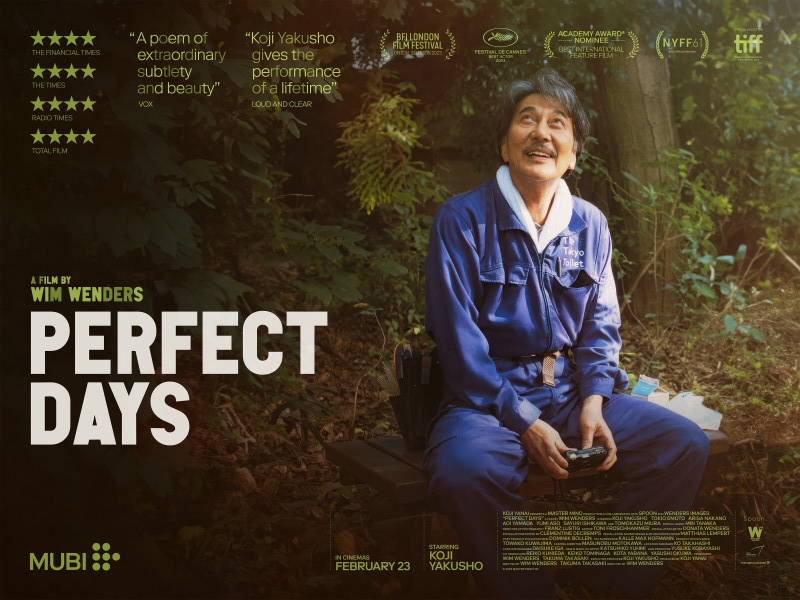
Up until a few months ago, I had never even heard of the film “Perfect Days,” but in the new age of cinema – of sequels, remakes, and connected cinematic universes – small “artsy” films don’t make as large of a splash as perhaps they should. A few nights ago, I gave it a watch and was impressed. In my mind, it is far more than the “simple living is awesome!” theme many reviews tend to portray. Spoilers to follow, but I would definitely recommend anybody give it a watch beforehand. At the very least, it’s a great little look into what some of what daily life in Tokyo entails. If you’d like just an ending impressions segment, you can skip to that at the bottom in the last section.
The film follows the life of Tokyo sanitation worker Hirayama, a slightly past middle-aged man with black hair starting to gray. Every morning Hirayama wakes up very early to the sound of an old woman sweeping the street, like clockwork. He performs his morning routine of putting away his futon, brushing his teeth, grooming his moustache, getting dressed, and even misting his robust collection of plants. He then grabs his wallet, keys, and coins for the vending machine outside his apartment (all laid out in an orderly fashion of course) and goes to work in his small, dark blue kei-car.
Hirayama is a sanitation worker who cleans toilets in Tokyo’s Shibuya ward – an upscale commercial and financial district, far different from where his apartment is located. He is meticulous about his work, going as far to have purchased his own gadgets and cleaning supplies to assist him (even a small mirror for checking underneath toilets and sinks!). He drives his little car around Tokyo, cleaning different bathrooms, meeting different people (many drunk or who view him as a nuisance when they want to use the bathroom). He then goes home, get changed, and begins his late afternoon and nightly routine. He goes to the public bath, then to a little bar in the subway, and then back home to read his many books. On the weekends, he might get his film developed or buy a new book. Some evenings he visits another bar where he’s been a regular for around 6 years. Every day is broken up by a dreamlike sequence showing books and trees, leaves, and light. The original name for the movie was this effect of light shining through tree leaves – ( komorebi – 木漏れ日). Hirayama takes pictures of this phenomenon during his lunch break. I’ll break up some of his special interactions in the movie below. Each highlights in some way particular aspects of how he lives.
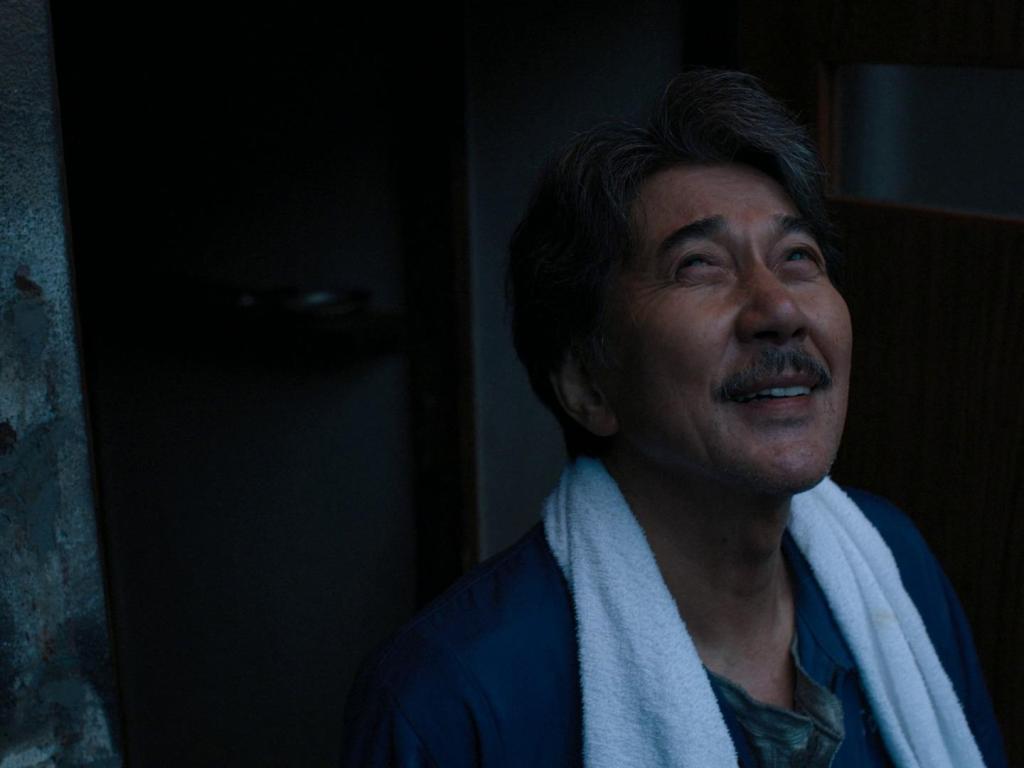
Chaos and Romance/No-mance – Takashi and Aya
Hirayama’s meticulous nature is immediately contrasted in the beginning of the movie with his young, loud, and undisciplined coworker, Takashi, who shows up late and begs Hirayama for cash to visit a girl he might (according to him) have a chance with – constantly complaining about how for modern love you need money.
This girl, Aya, visits Takashi at work but is unable to be driven to her own work1 as Takashi’s bike can’t start. Hirayama drives them both, and they listen to cassettes as she admires Hirayama’s taste in music. Takashi, in an effort to win her affection, hides one of Hirayama’s cassettes in her bag. Along the way, Hirayama visits a cassette shop with his younger coworker, eventually having to sell his rare cassette after giving his coworker money and running out of gas on the way home. With all this chaos, Hirayama seems to appreciate the positive moments he has with these people, even under the chaotic stress. A few days later, Aya returns, gives Hirayama his tape back, thanks him, and then gives him a quick kiss on the cheek.
As Takashi’s bike can’t start, Hirayama drives them both to where they need to go — Aya listening to cassettes as she admires Hirayama’s taste in music. Takashi, in an effort to win her affection, hides one of Hirayama’s cassettes in her bag. Along the way, Hirayama visits a cassette shop with his younger coworker, eventually having to sell his rare cassette after giving his coworker money and running out of gas on the way home. With all this chaos, Hirayama seems to appreciate the positive moments he has with these people, even under the chaotic stress. A few days later, Aya returns, gives Hirayama his tape back, thanks him, and then gives him a quick kiss on the cheek.
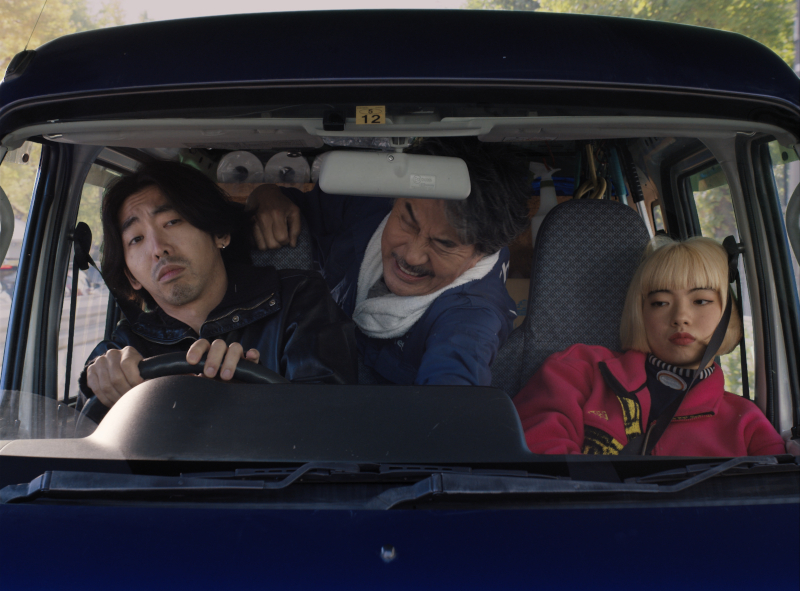
What I love about this particular sequence is the randomness and the insignificance (or perhaps deep significance?). In a typical movie, one might expect Aya to be a recurring character. To return time and time again, slowly developing a relationship with our main character – perhaps even a romantic relationship. This is subverted seamlessly. She never shows up again. The nice human interaction and affection she showed Hirayama is just that, and it ends there. Not everything needs to be romantic, not everything needs to have immense import. Some things can just be a nice connection, however fleeting – much like the light that leaks through tree leaves, ever changing, near impossible to catch in one singular moment.
Delight in the Mundane and Frivolous – Tic-Tac-Toe Game
One day, Hirayama finds a small piece of paper hidden in a crack in one of the toilets he cleans. It’s the beginning of a tic-tac-toe game, and he immediately puts it in the trash. However, at the end of his day – a stressful one at that – he decides to indulge in the frivolity and begins a back-and-forth stranger tic-tac-toe game. In my mind, Hirayama indulges in the frivolity, in the fun, and enjoys another very human interaction, no matter how simple it might seem, no matter that he never even meets the other person. When the game finishes, the stranger writes a “Thank you!” on the note in English.
Family – Cleaning at a Children’s Playground
On one of Hirayama’s workdays, he finds a crying child in a bathroom and leads them out to find their mother. The mother quickly comes running and grabs the child out of Hirayama’s hand, neither acknowledging his presence or help. The child gives a wave as they walk away. Hirayama smiles and waves back, but he seems a bit sad.
Family – Hirayama’s Runaway Niece – Nico
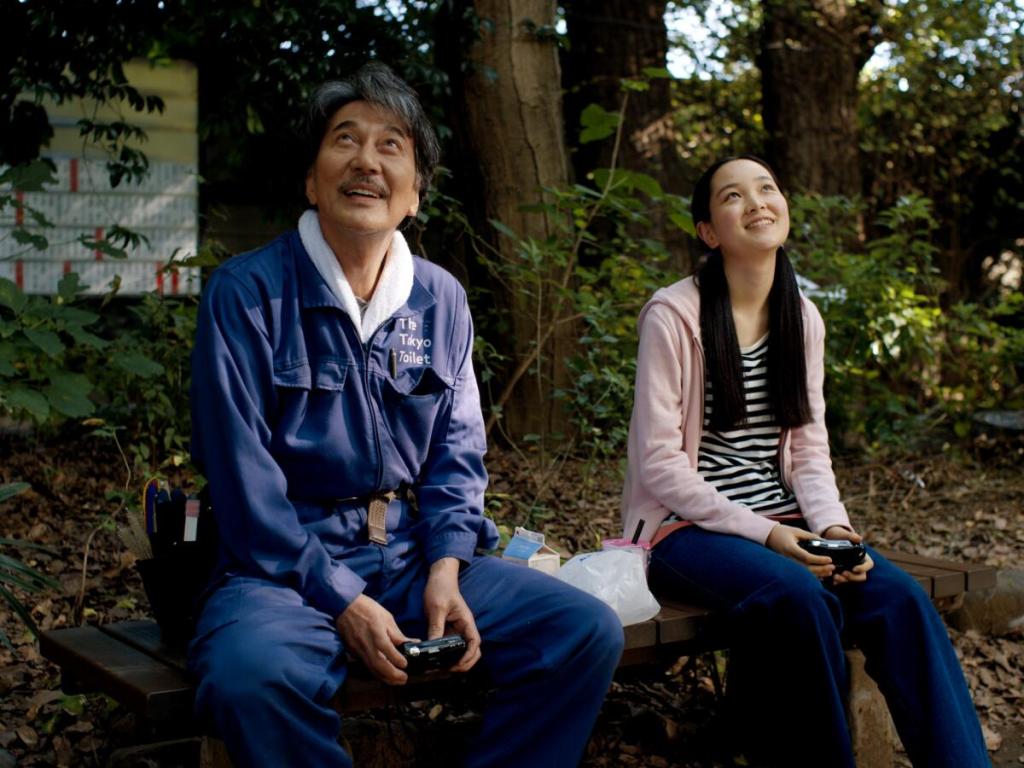
One evening after work, Hirayama comes home to his niece (probably about 12-14?), whom he hasn’t seen in years, waiting for him. Surprised to see her much older, Hirayama invites her in, unsure what to do with this unexpected family visit. The viewer slowly learns that Nico has run away from home as her mother (Hirayama’s younger sister) and her are not getting along. Nico takes Hirayama’s room as he sleeps in a closet. Over the next few days, she accompanies him to work, talks books and life generally, as well as his relationship with her mother. One of the nicest moments is when she and Hirayama are biking across the Sakurabashi Bridge in Asakusa. They stop on the bridge, and Nico asks if he’d like to bike to the ocean. He says “Next time.” When is “next time” she responds. Hirayama then says one of the most quotable parts of the movie:
“Kondo wa kondo. Ima wa ima.” = “Next time is next time. Now is now.”
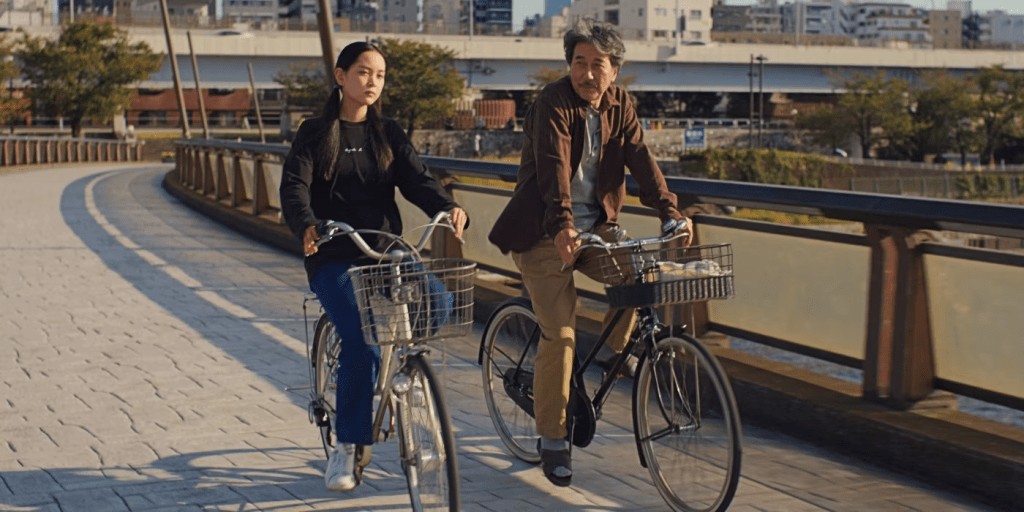
This very much highlights the mindful, living in the present theme that the movie presents and critics and reviewers have latched onto. It’s not bad advice; in fact, I think it’s pretty good advice. Learning to appreciate the now for the now, not worrying too much about the past or future, is a good tenet to live by. The morning air that Hirayama appreciates every single morning, or the drink he has after work, or even the homeless man he watches dance in the park. He appreciates all these little intricacies and idiosyncrasies of life because he lives by that tenet. Nevertheless, I think the movie raises the question of whether or not this is truly a lifestyle that functions long-term. A couple more sequences in the movie highlight this fact
Family – Hirayama’s Sister Comes “Home” to Roost
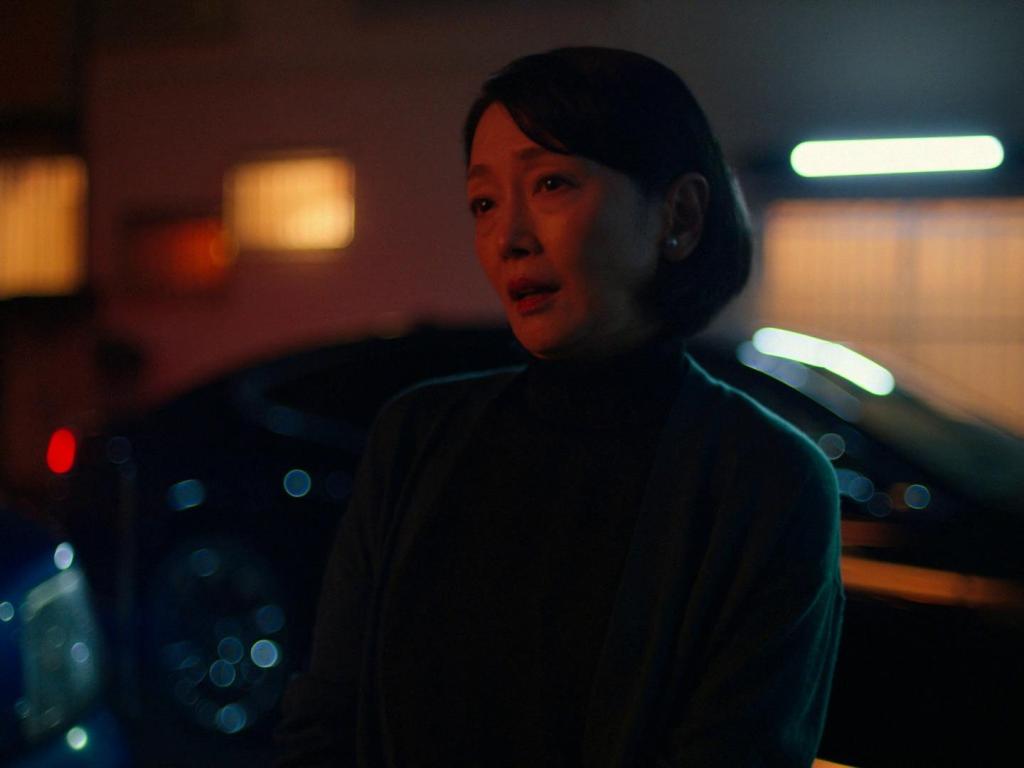
After another day with his niece, Hirayama makes a stealthy call to his mostly estranged sister to let her know where she is. Later that evening, after the bike ride, they come home to an expensive car waiting in Hirayama’s comparatively rundown apartment complex. Out steps Nico’s mother, a high-class looking woman being driven by a chauffeur. Nico says she doesn’t want to go, but with some encouragement from Hirayama, she acquiesces. There is some obvious tension between Hirayama and his sister. They awkwardly talk with his sister giving him his favorite chocolate. His sister asks for them to visit their sick (dementia I believe) father, but Hirayama quickly refuses, hinting at some kind of abusive relationship. At the end, his sister asks him if he really cleans toilets for a living, and he responds yes. As the car pulls away, he breaks out into tears.
His Worst Day?
Following the departure of his niece and thus his family history coming back to him, Hirayama comes to work and gets a call from Takashi – who promptly tells Hirayama he quits. Hirayama then has no replacement and has to work faster and longer to cover him. Hirayama then goes to his usual favorite bar looking to relax and talk to the hostess with whom it’s heavily hinted that Hirayama may have feelings for. Hirayama sees her hugging a man and rides away on his bicycle towards the river after grabbing a pack of cigarettes and three beers.
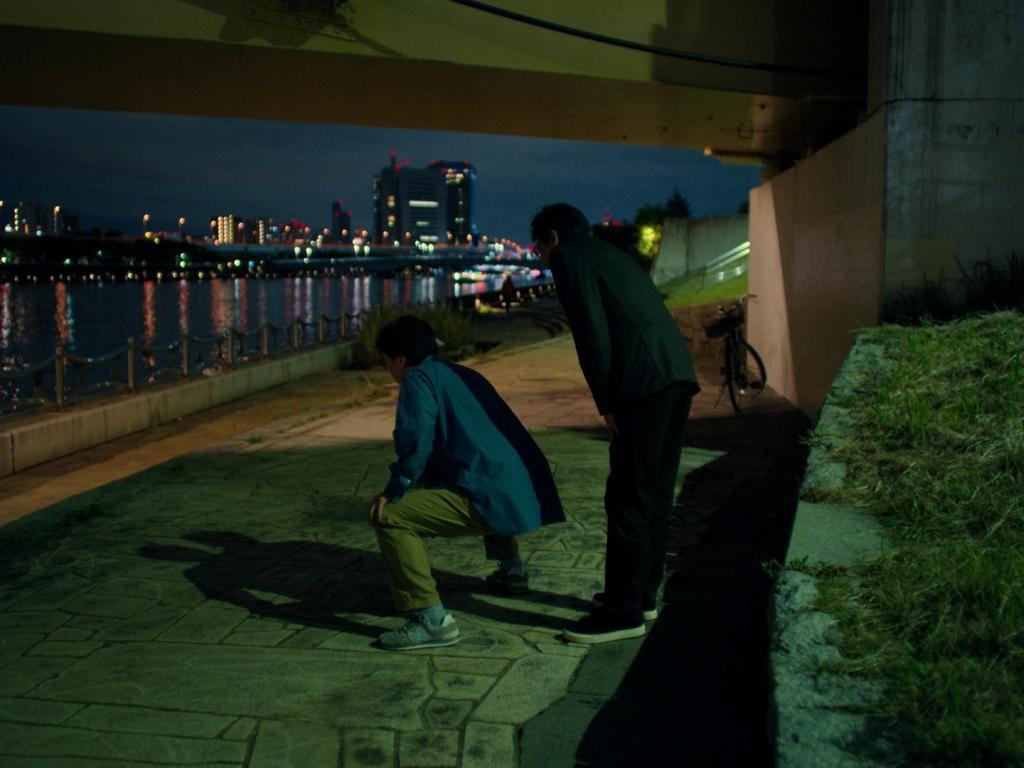
The man she was hugging eventually comes to the river and says that he is her ex-husband and only has a few months to live due to cancer. He was making peace with his ex-wife before he passed. Hirayama then has a good conversation with him (denying that he’s interested in her), consoling him, and even playing “shadow-tag” with him after the question is posed: Do two shadows overlapping create a darker shadow? The answer would be no, but Hirayama doesn’t seem to like that answer. Eventually, they part ways.
The Future
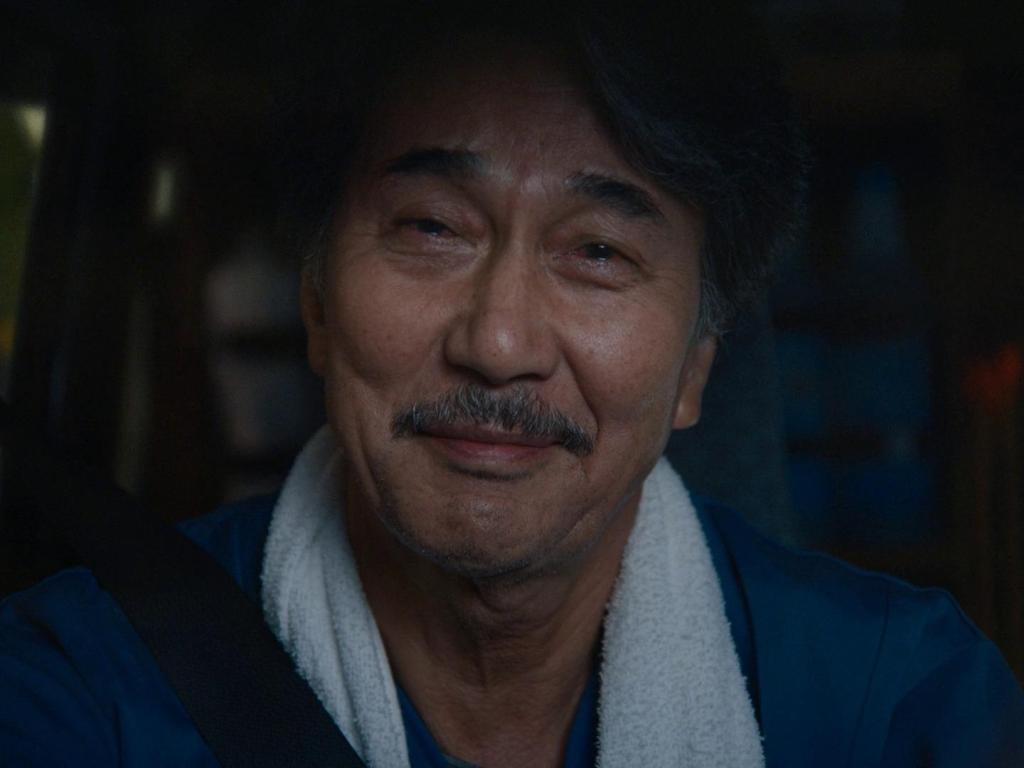
Hirayama starts the next day with his usual routine, but as he drives to work, he starts crying uncontrollable, his face flickering between sadness and happiness.
Are Hirayama’s Days Actually “Perfect Days?”
I feel the obvious answer is no. His days are not perfect, far from it. While by and large he seems to enjoy his days, can take the bad with the good, and finds joy in the everyday (something we should all aspire too), the film begs the question: Is he really happy? Are these really “Perfect Days?”
It seems clear to me that in his effort to live a simple, tranquil life, Hirayama has given up on things – both in his past and his future. He seems unwilling to confront his traumatic past, and traded peace of mind for limited contact with his family. When his niece does come to visit him, he’s happy, but it also reminds him that he doesn’t really have a strong connection with his family. His father is sick and was abusive, his sister can’t seem to understand why he’s a toilet cleaner living a simple life, and his niece only has limited freedom to see him. Even the small interaction of helping a child at the beginning of the movie, and the mother rudely grabbing her child away from him with no remarks, reinforces this fact.
Hirayama also has a warm, kind personality that draws people to him, regardless of his reticence. Most things in his life are simple, and although he doesn’t avoid human connection, he doesn’t push for deeper connection with people when he could. He would rather deny that he might be romantically attracted to the bar owner he’s known for six years than think of the future and the anxiety that would come with pushing that envelope. The films ends with the complexities and chaos of the past week coming to him all at once. He smiles, he cries, his face a twisted mess of human emotion that reflects the very best and the very worst. He had a good week, he did and saw some wonderful things, but there is clearly a deep-set sadness there that I’m not sure his lifestyle can remedy.
Ultimately, Hirayama lives firmly in the present, perhaps to the detriment of both his past and his future. The end leaves it to the viewer to imagine what comes next for Hirayama, and perhaps for themselves. To imagine what truly does make for “Perfect Days.” After a week of thinking about it, I still don’t have an answer, but embracing life in all of it’s craziness is at least part of it.
 The Studious Salamander
Leave a comment